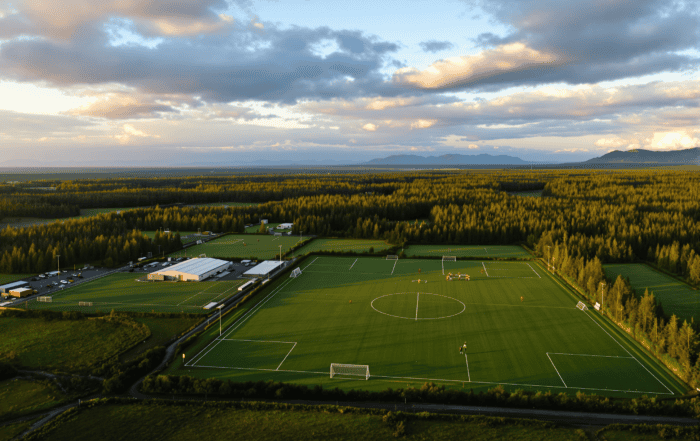

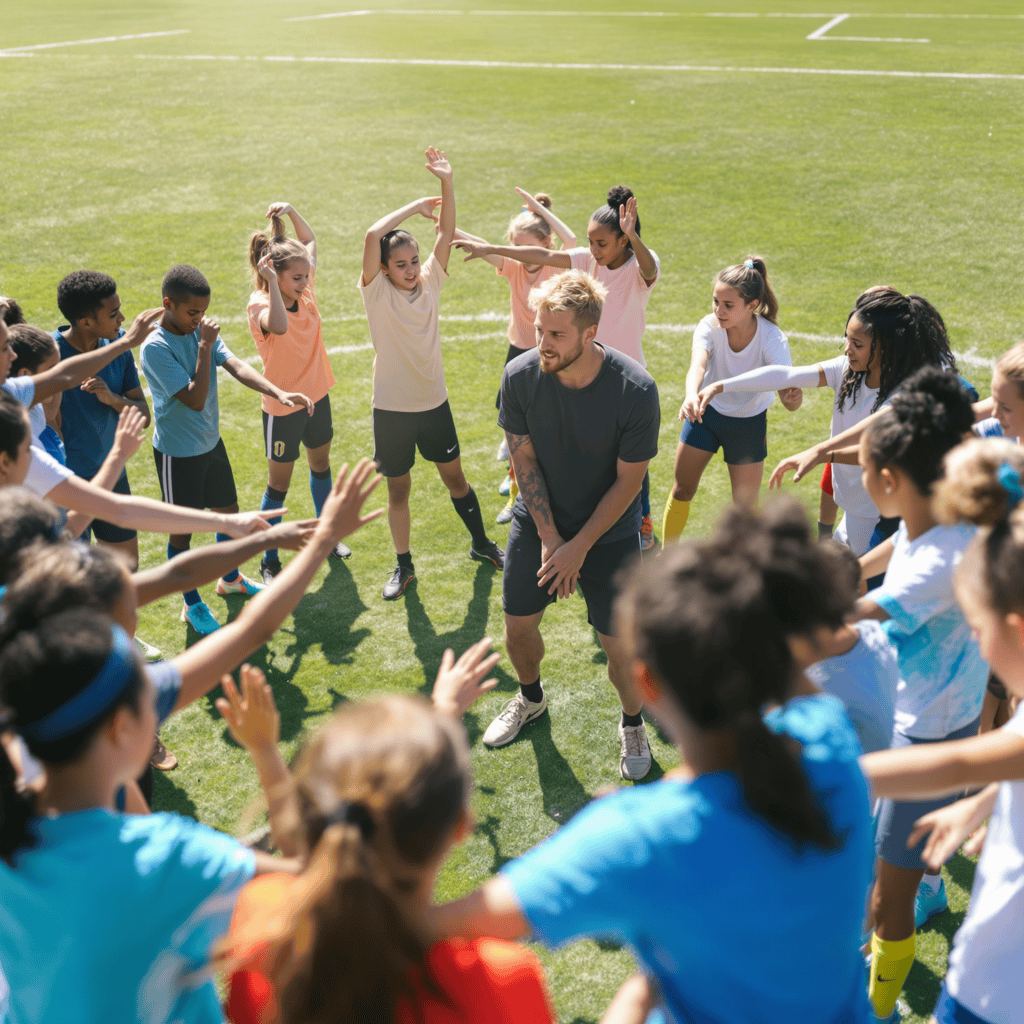
Alaska Youth Soccer has adopted U.S. Soccer’s “Recognize to Recover” program, providing coaches, players, parents and referees with resources aimed at improving injury prevention and reducing injury severity through proper conditioning and training routines, according to the organization’s website, Alaska Youth Soccer. The move comes as national data show rising rates of serious knee injuries among young athletes, particularly in girls’ soccer.
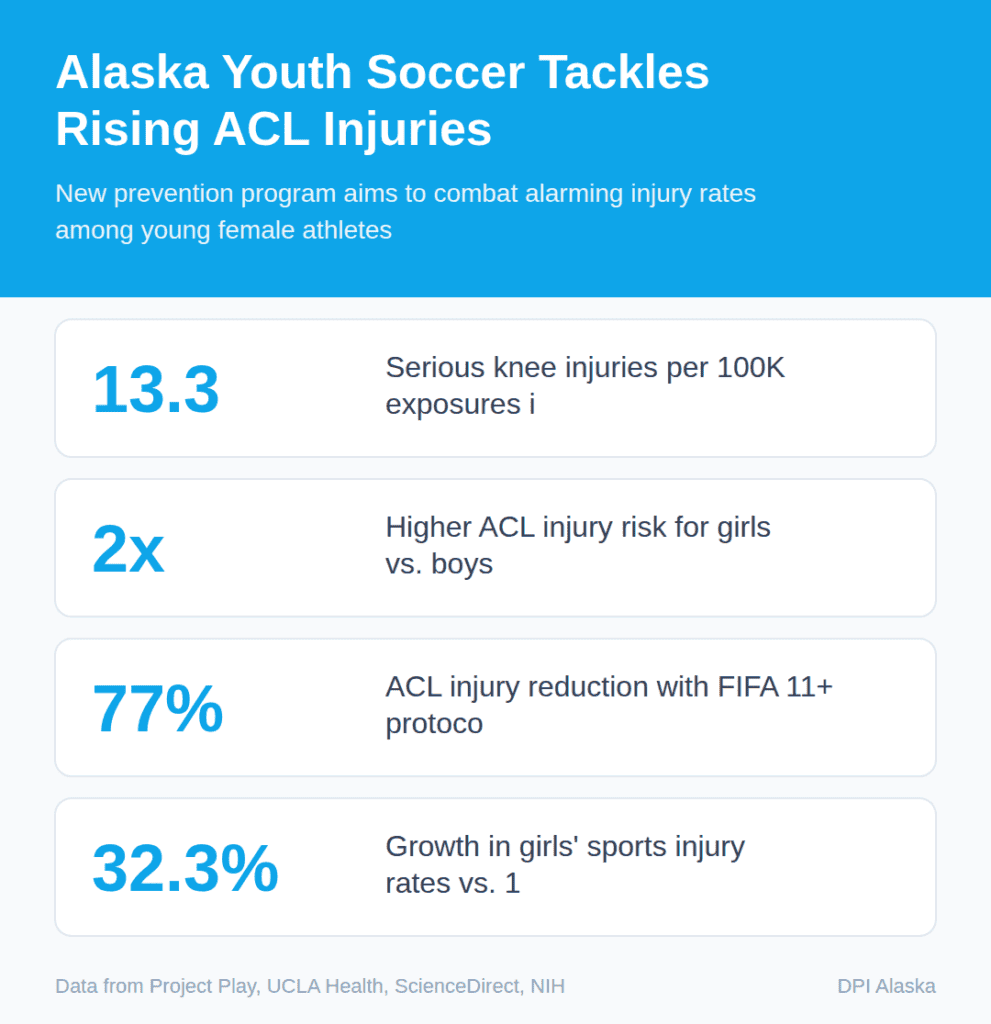
An analysis by Project Play found that among girls’ sports, soccer had the highest average annual rate of serious knee injury at 13.3 per 100,000 exposures, ahead of basketball at 12.2 and lacrosse at 10.4. The same analysis found injury rates in girls’ sports grew 32.3% over the study period, compared with 14.5% for boys’ sports, according to Project Play.
Of girls’ soccer players who suffered a serious knee injury, 82.3% sustained a complete ligament tear, and ACL injuries now make up more than 14% of all knee injuries recorded in the analysis, according to Project Play.
A Disproportionate Risk for Female Players
Research cited by UCLA Health shows girls are more than twice as likely as boys to suffer an ACL injury, and that roughly a third of preteen and teen soccer players will sustain an ACL tear during their playing years, according to UCLA Health.
A systematic review and meta-analysis of adolescent athletes found that soccer carried the greatest relative risk of ACL injury for female athletes compared with other sports, with the highest per-season ACL injury risk among female athletes at 1.08%, ahead of basketball and gymnastics, according to the study published in ScienceDirect. The same analysis found that youth athletes competing in club sports had significantly higher ACL injury rates than those in school sports, whether measured by athletic exposures or by hours of exposure, according to ScienceDirect.
The FIFA 11+ Program’s Track Record
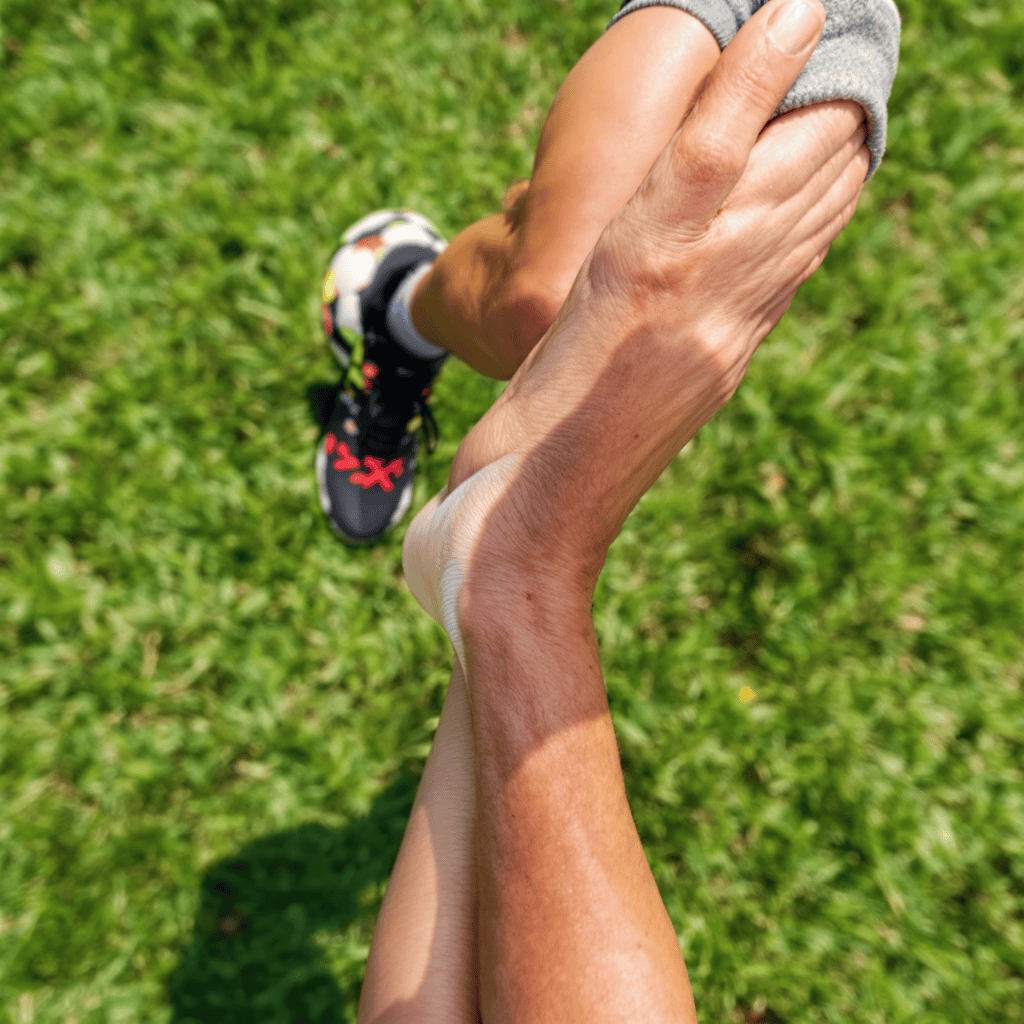
One of the programs incorporated into injury prevention efforts nationally, including through Alaska Youth Soccer’s adoption of “Recognize to Recover,” is the FIFA 11+ warm-up protocol. A study of competitive collegiate male soccer players found that use of the FIFA 11+ program decreased the incidence of ACL injuries by 77%, according to research published in the National Institutes of Health’s PMC database.
The same study found that the program’s protective effect against ACL injury held even when no licensed medical professional was present during training sessions, and that it also reduced injury risk specifically for players competing on turf fields, according to the PMC-published research.
Targeting Specific Muscle Groups
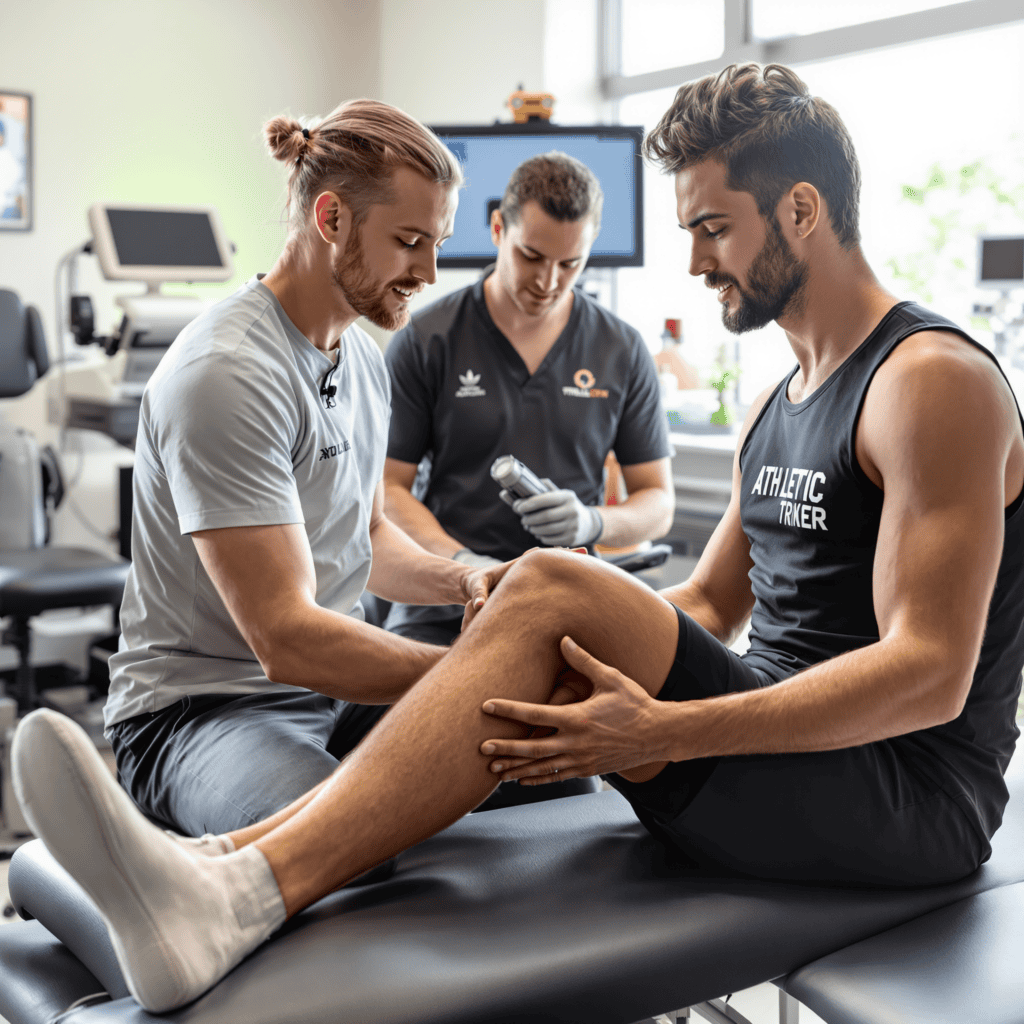
The American Orthopaedic Society for Sports Medicine has identified specific physical deficits that contribute to ACL injury risk. The organization notes that targeting weak hamstring and hip external rotator and abductor muscles, along with improving balance and coordination during functional movements, can help decrease ACL injury risk. AOSSM also states that prevention programs are most beneficial when started in early adolescence, according to AOSSM.
That guidance aligns with the age range of many youth club soccer players in Alaska, where organized competitive play often begins well before high school.
Local Clinical Support
In Anchorage, Orthopedic Physicians Alaska employs certified athletic trainers who work full time in public schools throughout the community to help prevent and treat athletic injuries, according to the clinic’s sports medicine program. Those trainers also coordinate follow-up care with coaches and parents, the clinic states, embedding injury prevention resources directly into school athletic programs rather than relying solely on outside referrals.

The combination of school-based athletic trainers and statewide adoption of programs like “Recognize to Recover” reflects a broader shift among youth sports organizations to address knee injuries before they occur, rather than treating them only after the fact. National data suggest the stakes are significant: with soccer carrying elevated ACL injury risk for female athletes and club-sport participants facing higher exposure rates than their school-sport counterparts, according to the meta-analysis published in ScienceDirect, prevention-focused training has become a point of emphasis for organizations overseeing youth soccer in Alaska.
Whether these combined efforts — national warm-up protocols, targeted strength and balance training, and locally embedded athletic trainers — will measurably reduce ACL tear rates among Alaska’s young soccer players over time remains to be documented through future injury surveillance data.
Sources
- Recognize to Recover Program – Alaska Youth Soccer
- Does the FIFA 11+ Injury Prevention Program Reduce the Incidence of ACL Injury in Male Soccer Players? – PMC
- Does the FIFA 11+ Injury Prevention Program Reduce the Incidence of ACL Injury in Male Soccer Players? – PMC
- Analysis: Serious knee injury among teen athletes grows 26% – Project Play
- Analysis: Serious knee injury among teen athletes grows 26% – Project Play
- ACL tears in young athletes at epidemic levels | UCLA Health
- Reported Anterior Cruciate Ligament Injury Incidence in Adolescent Athletes Is Greatest in Female Soccer Players and Athletes Participating in Club Sports: A Systematic Review and Meta-analysis – ScienceDirect
- Reported Anterior Cruciate Ligament Injury Incidence in Adolescent Athletes Is Greatest in Female Soccer Players and Athletes Participating in Club Sports: A Systematic Review and Meta-analysis – ScienceDirect
- ACL Injury Prevention in Youth Athletes | AOSSM
- Sports Medicine – Orthopedic Physicians Alaska