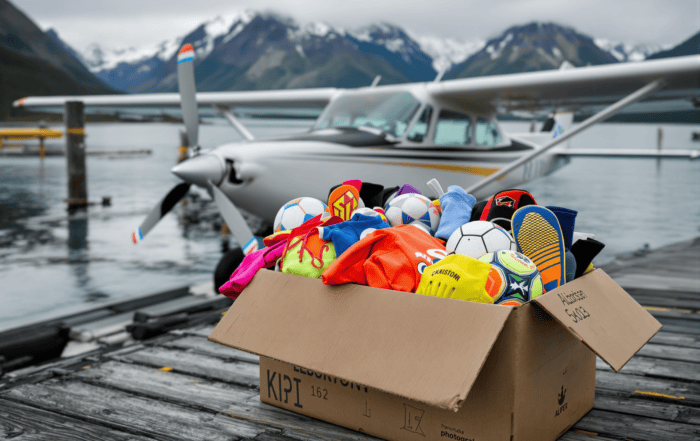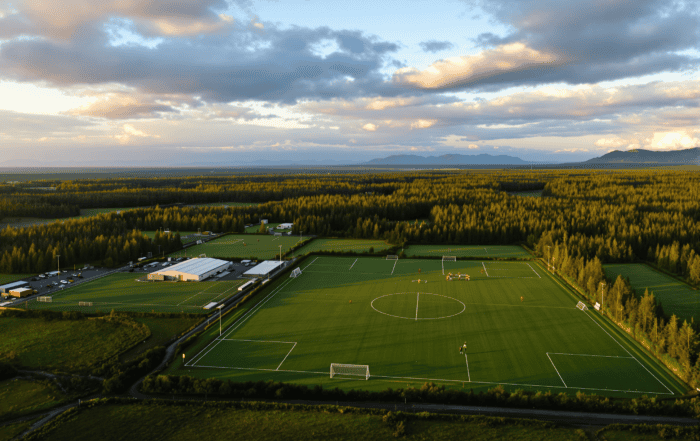
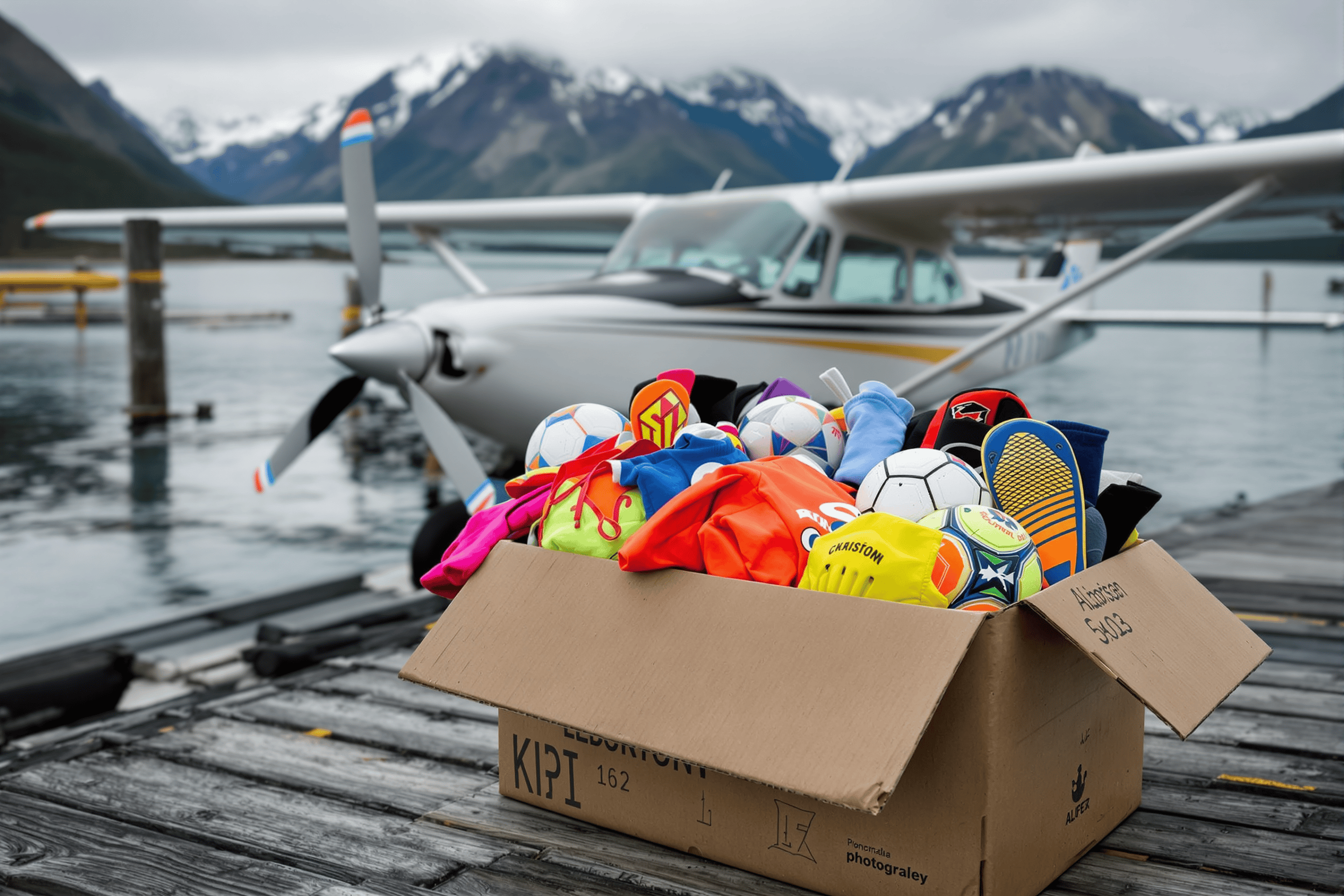
Youth soccer organizers across Alaska are adapting their equipment distribution methods to account for high shipping costs, seasonal weather delays, and limited road access that complicate getting jerseys, cleats, and balls to players in rural and bush communities. The challenges stem from the state’s geography, according to organizations that coordinate youth sports statewide.
Alaska’s youth soccer pathway is organized by the Alaska Youth Soccer Association, the official U.S. Youth Soccer state association, which offers year-round programming despite the state’s geographic and weather challenges, according to US Soccer Parent.

Equipment Access in Youth Programs
In the YMCA of Alaska’s youth soccer program, every participant receives an official jersey, shorts, socks, soccer ball, and shin pads, but families must supply their own gym shoes or cleats, purchased locally at stores such as Walmart, Fred Meyer, or Target, or ordered online, according to YMCA of Alaska. That arrangement places the burden of sourcing footwear on families in communities where retail options may be limited or nonexistent.
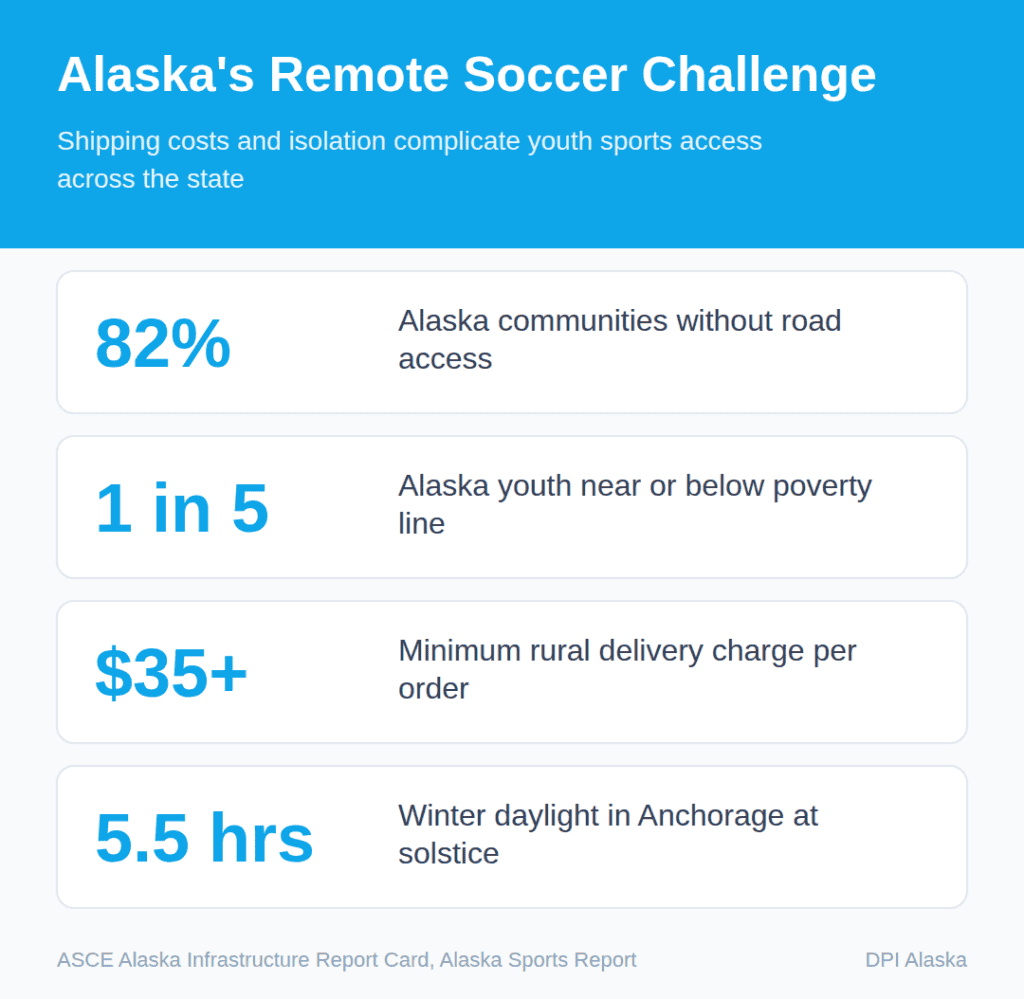
Financial barriers compound the logistical ones. The Healthy Futures Game Changer Fund has issued grants covering sports equipment, club soccer registration fees, kick-sleds for a rural youth dog-sled program, and wrestling shoes, aimed at Alaska youth, one in five of whom hover near or below the poverty line, according to the Alaska Sports Report.
Differences in climate, geography, and economy across Alaska mean it is often harder for people in rural areas to enter sports leagues or find safe indoor spaces to train, prompting families to find creative alternate ways to engage in play, according to the M.J. Murdock Charitable Trust.

A Supply Chain Built Around Isolation
The equipment gap traces back to the state’s transportation infrastructure. According to the ASCE Alaska Infrastructure Report Card, 82% of Alaska communities lack road access, a fact that shapes every delivery promise made into the state, with rural interior, bush, and most Southeast towns operating on small-aircraft schedules and seasonal access, according to an operational guide for retailers shipping to Alaska.
Moving goods to rural Alaska is a routine but complex process that relies on barges, ships, cargo planes, small bush planes, snowmachines, and ATVs to get supplies to remote communities, according to Alaska Business magazine. Soccer balls, cleats, and other gear destined for village programs move through the same networks used for groceries, building materials, and medical supplies.

Those networks come at a cost. A dedicated rural Alaska delivery service charges a minimum of $35 per order plus a $3.99 packaging fee per parcel, with special quotes required for higher-dollar items such as equipment shipped to Alaska’s bush communities, according to Express Yourself Expeditors. For youth programs operating on limited budgets, those per-parcel fees can add significantly to the cost of outfitting a single team.
Reaching remote Alaska villages can require multi-leg air freight logistics. In one example cited by Alaska Air Cargo, oversized wind-turbine sections shipped from Minnesota were flown into Alaska on large aircraft and then transferred to smaller DC-6 and DC-3 planes to reach a village of 300 people — the same layered logistics chain that smaller shipments of sports equipment must often follow to reach similarly sized communities.
Weather as a Persistent Obstacle
Weather adds another layer of unpredictability to deliveries. Low-pressure systems from the Gulf of Alaska bring heavy snow and low ceilings from October through April, and Anchorage gets only about five and a half hours of daylight on the winter solstice compared with nine to ten hours across most of the contiguous United States, both factors that ground small aircraft and delay shipments to rural communities, according to the retailer shipping guide. For soccer programs that run fall and winter seasons, those seasonal disruptions can arrive at the same time equipment orders are placed for a new season.

Programs Continue Despite Constraints
Despite the logistical hurdles, organizations coordinating youth soccer in Alaska continue to run year-round programming, according to US Soccer Parent. Grant funding through groups such as the Healthy Futures Game Changer Fund and support from organizations like the YMCA of Alaska have provided some families with core equipment, while shipping and logistics providers have built specialized services around the state’s road-limited geography to keep goods, including sports gear, moving to bush and rural communities.
The combination of grant support, retail purchasing in larger hub communities, and a multimodal delivery system involving barges, cargo planes, and bush planes remains the primary way soccer equipment reaches players across Alaska’s remote regions, according to the sources cited above.
Sources
- Alaska – US Soccer Parent
- Youth Soccer – YMCA of Alaska
- Healthy Futures Game Changer Campaign kicks off today to raise money for underserved youth in sports – Alaska Sports Report
- Grant Stories: Recreation in Alaska | M.J. Murdock Charitable Trust
- How to ship to Alaska: an operational guide for retailers
- Rural Supply Lines
- fast, dependable deliveries to rural alaska
- Air Freight Shipping to and from Alaska | Remote Alaska
- How to ship to Alaska: an operational guide for retailers