

Women are taking on head and assistant coaching roles at youth soccer clubs across Alaska, part of a broader effort to increase female representation in a coaching profession that remains overwhelmingly male at the youth, collegiate and international levels.
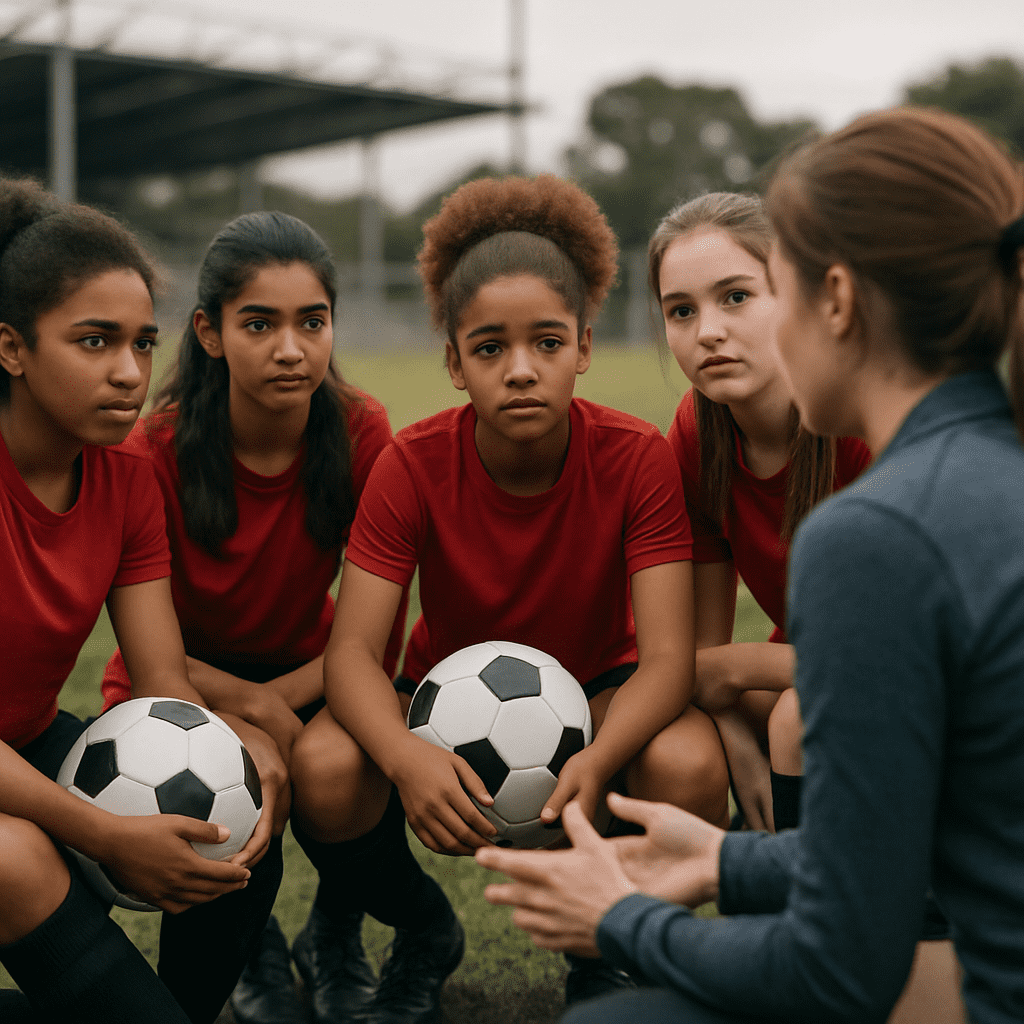
At the Anchorage Youth Soccer Club, assistant coach Kavya has trained under Executive Director Jo Reid, whose age-group team achieved the most winning record for an Alaskan girls’ age group in history, according to the club’s coaching staff page. (Anchorage Youth Soccer Club)
Also on staff at the Anchorage club is Sandi Scott, who began her coaching career after becoming a teacher, starting out by coaching a middle school team before moving into club-level coaching, according to the organization. (Anchorage Youth Soccer Club)

A Path Back to Alaska
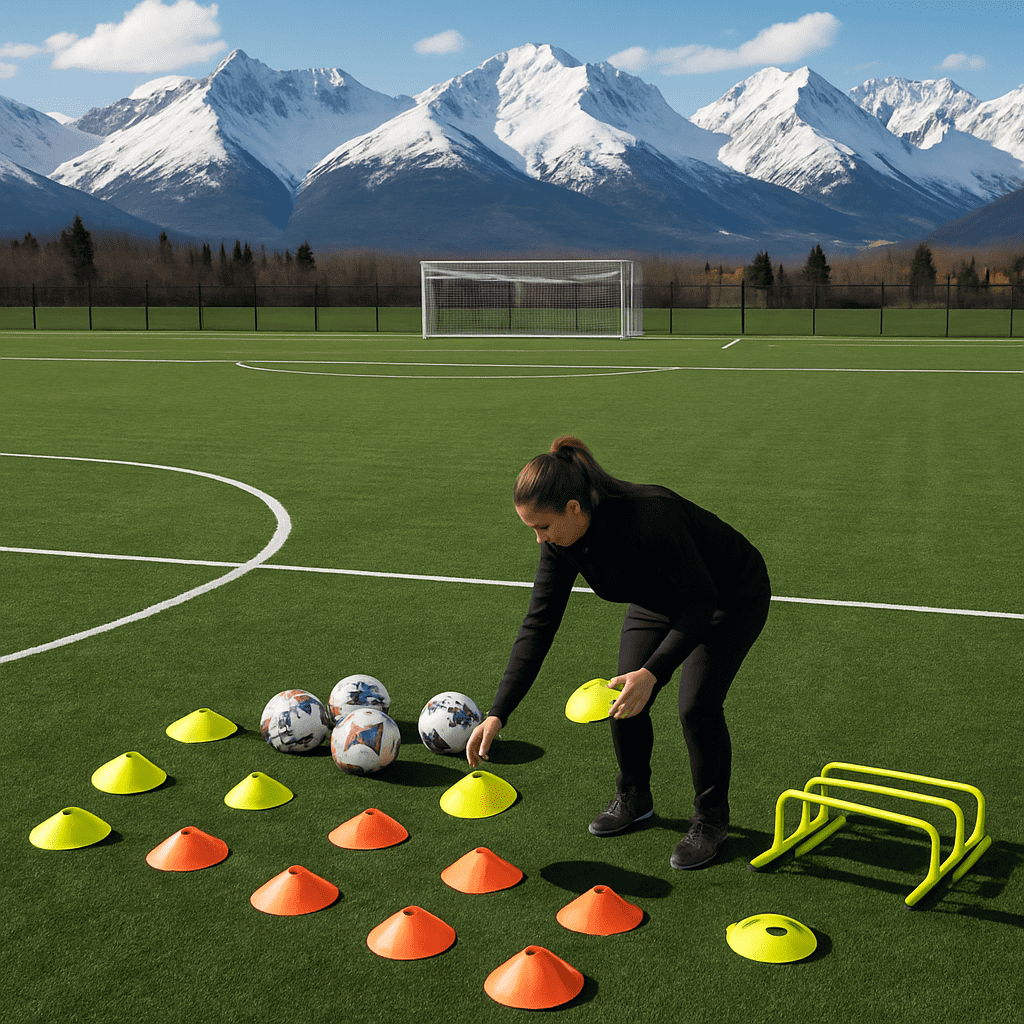
At Alaska Rush, coach Carly, a former University of Southern California player, returned to Alaska specifically to give back to youth soccer in the state after the game shaped her own opportunities growing up, according to the club’s coaching staff listing. (Alaska Rush)
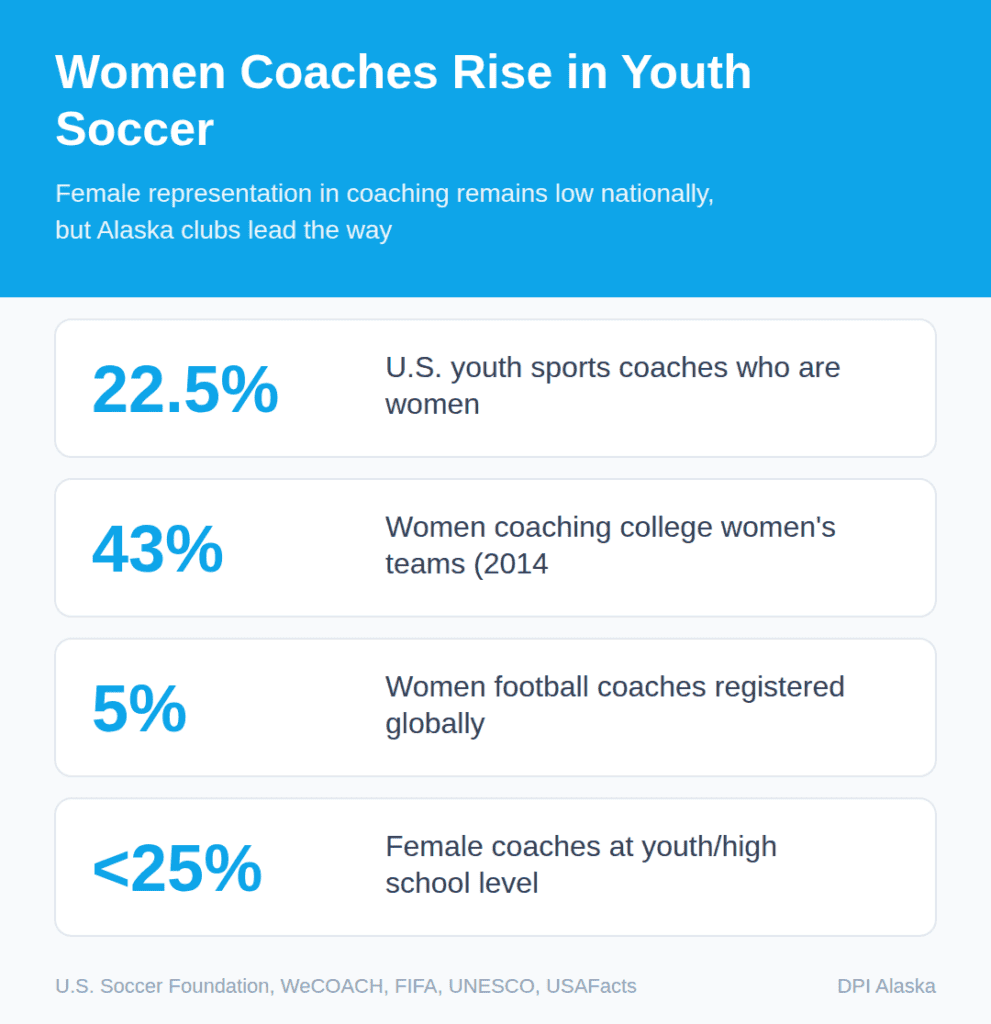
Their presence on Alaska sidelines comes as national data shows women remain underrepresented in coaching roles across the sport. Nationally, only 22.5% of youth sports coaches in the United States are female, and the share of women coaching women’s intercollegiate teams has fallen from 90% in 1972 to roughly 43% in 2014, according to the U.S. Soccer Foundation. (U.S. Soccer Foundation)

Research from WeCOACH shows a similar trajectory: before Title IX, more than 90% of women’s college teams were coached by women, but that share fell sharply after 1972 and has hovered around 40% to 42% for the past decade, though the organization notes the number has recently begun to climb again. (WeCOACH)
A Global Gap
The disparity extends well beyond the United States. FIFA data indicates women make up only around 5% of registered football coaches worldwide, and at the Tokyo 2020 Olympics, only 13% of coaches were women, according to the UN Women Knowledge portal. (UN Women)
UNESCO reports that 95% of football coaches and 91% of referees globally are men, and the first woman to referee a World Cup match did so only in 2022. (UNESCO)
In American college sports specifically, women’s soccer has struggled to close the gap even as opportunities for female head coaches overall have grown. Among the top eight women’s college sports by revenue, women’s soccer had less than one-third of its head coaching positions held by women, even though women made up 41% to 45% of head coaches of women’s teams overall between 2003 and recent years, according to USAFacts. (USAFacts)
Mentorship Programs Aim to Build a Pipeline
Professional and national organizations have launched mentorship initiatives intended to address the shortage at its source: the youth and high school levels, where most coaches begin their careers. The Washington Spirit created its Coaching Mentorship Program because less than 25% of coaches at the most formative youth and high school levels of development are women, and the club pairs aspiring female coaches with experienced mentors to address that gap. (Washington Spirit)
At the national level, U.S. Soccer’s SheChampions Coaching Mentorship Program, launched alongside the Jill Ellis Scholarship Fund, paired 23 female candidates pursuing Pro and “A” license coaching courses with experienced mentors, an effort aimed at growing the pipeline of licensed women coaches across the country. (U.S. Soccer)
Local Impact
In Alaska, the presence of coaches such as Reid, Kavya, Scott and Carly reflects the same dynamics playing out nationally: individual clubs relying on coaches who came up through playing careers or classroom teaching to fill leadership roles, even as the broader numbers show women remain a minority in coaching ranks at every level of the sport, from local youth clubs to World Cup officiating crews. (Anchorage Youth Soccer Club) (Alaska Rush)
Neither Anchorage Youth Soccer Club nor Alaska Rush has publicly stated formal targets for increasing the number of female coaches on staff, according to information currently available on their respective websites.
Sources
- Coaches – Anchorage Youth Soccer Club
- Coaches and Staff | Alaska Rush
- Coaches – Anchorage Youth Soccer Club
- Someone Like You – U.S. Soccer Foundation
- Research | WeCOACH
- Facts and figures: Women in sport | UN Women Knowledge portal
- Towards Victory for Gender Equality | UNESCO
- Men far outnumber women on coaching staffs in college sports | USAFacts
- The Washington Spirit Announces 2025 Spirit Coaches Mentorship Program Participants
- U.S. Soccer Announces Participants for Inaugural SheChampions Coaching Mentorship Program, Presented by Volkswagen