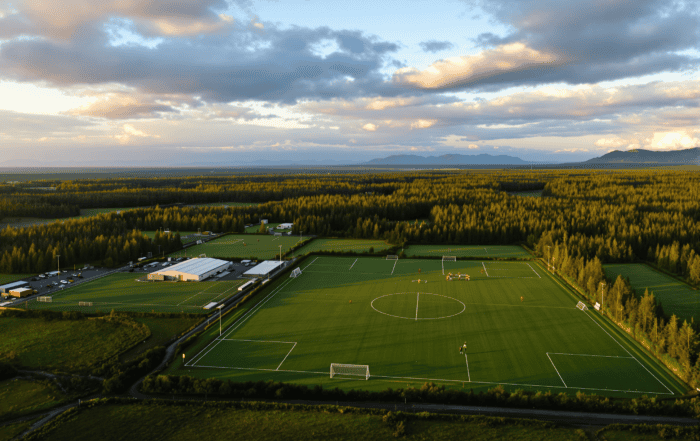

In communities scattered across Alaska, youth soccer depends less on professional infrastructure than on the labor of parents who organize carpools, run fundraisers and build facilities themselves. The Alaska Youth Soccer Association (AYSA), the official US Youth Soccer state association, provides year-round programming for players of all ages and skill levels despite the state’s geographic and weather-related challenges, according to the organization.
That statewide framework, however, still leaves much of the day-to-day work of youth soccer to families. In rural Alaska, where towns can be separated by hundreds of miles of terrain with no road connections, getting a team to a game often requires air travel, and the bill falls largely on parents and local boosters.
The Cost of Competing in Rural Alaska
In Ketchikan, sports teams must raise tens of thousands of dollars each season to cover players’ travel to compete against other schools, and in some cases the teams even pay for opposing squads to fly in for home games, according to reporting by KTOO.

A former Ketchikan football coach described the toll that burden takes on households. “It’s intense fundraising these kids and families have to do,” the coach said, calling for the state to find a better way to support rural and isolated communities.
For families, the payoff of hosting games locally rather than sending teams on the road is tangible. One parent, speaking to public radio station KRBD, explained that home games mean kids don’t miss school days and parents get the chance to actually watch their children compete. “As a parent, I’d like to watch my kids play,” the parent said.
Parents as Builders
In some communities, parental involvement extends well beyond fundraising for travel — it includes constructing the facilities where youth sports happen at all. In Homer, a recreational and fitness facility known as SPARC, which has become a community hub for soccer, pickleball, basketball and other sports, was originally built in 2016-17 by a local youth soccer club working alongside broader community efforts, according to the M.J. Murdock Charitable Trust.
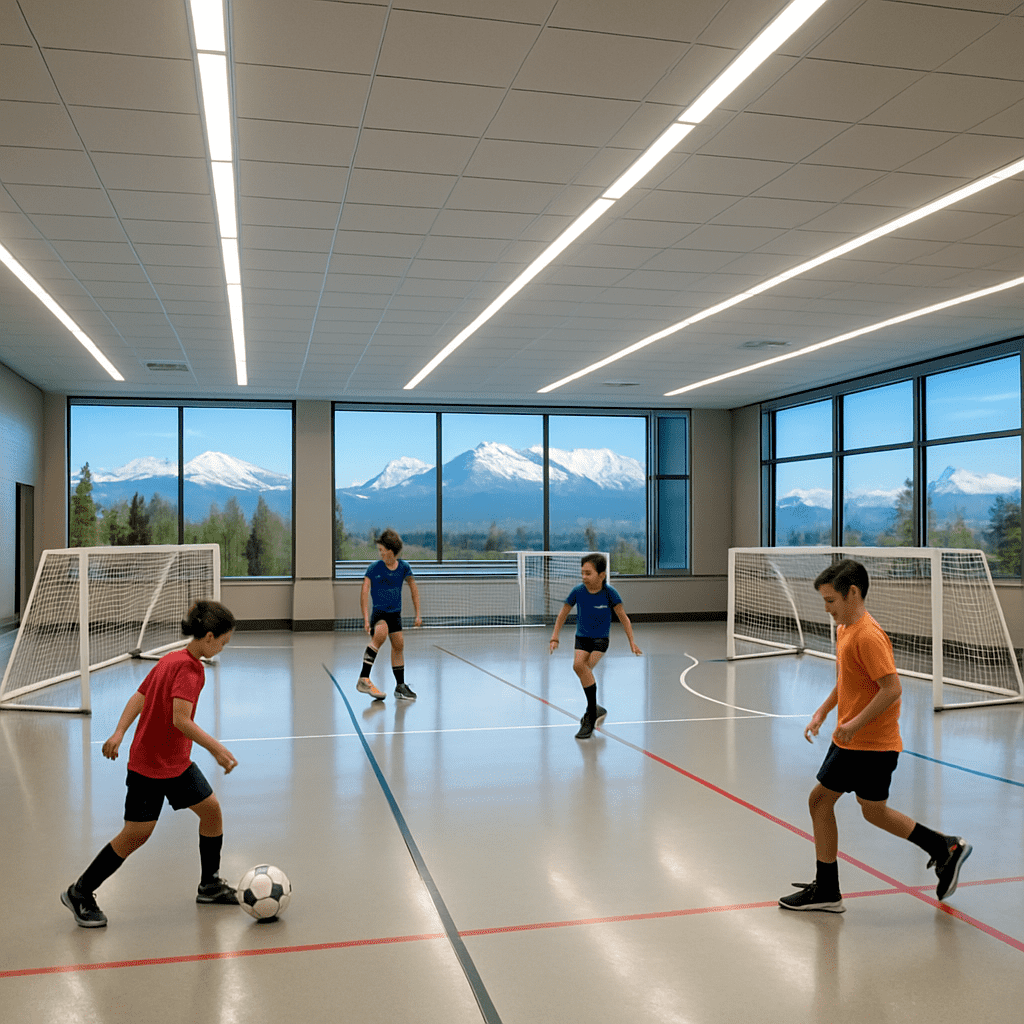
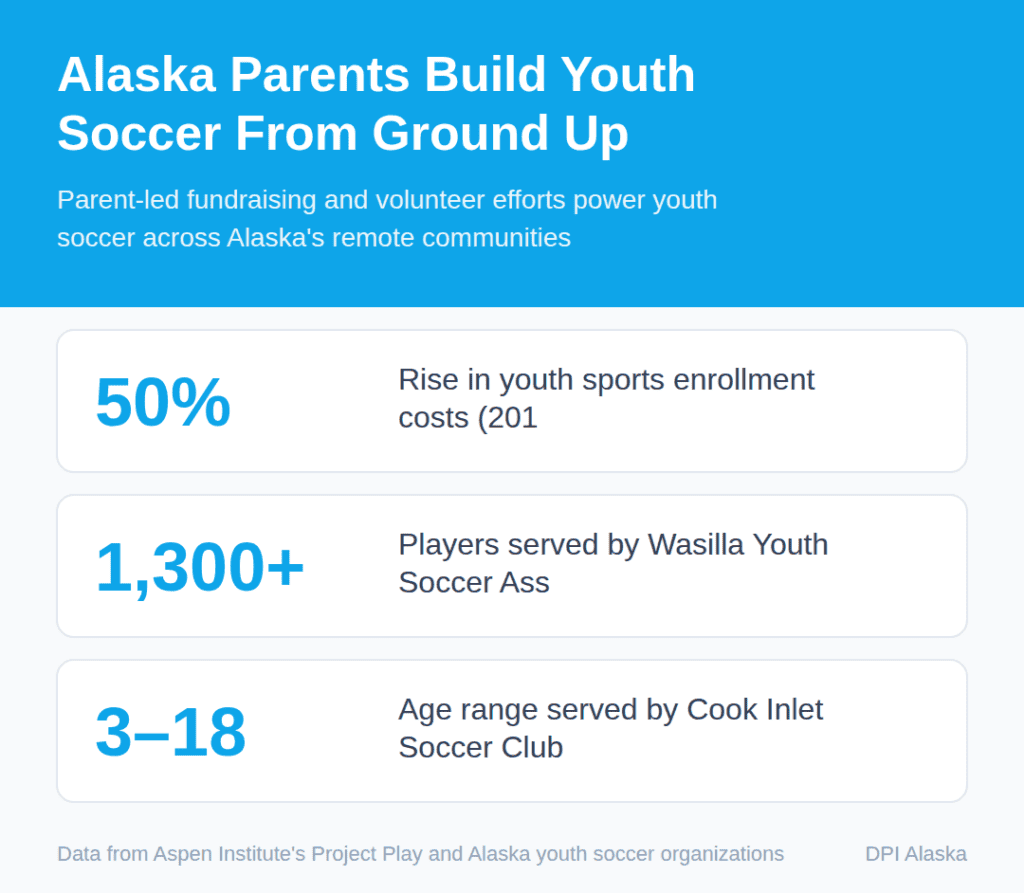
That model of grassroots organization is echoed in Alaska’s larger population centers, where nonprofit clubs run much of the youth soccer pipeline. Cook Inlet Soccer Club (CISC), a 501(c)(3) nonprofit and AYSA member based in Anchorage, operates year-round recreational and competitive soccer programs for Alaskans ages 3 to 18, according to the club.
In the Mat-Su Borough, the Wasilla Youth Soccer Association is now in its third generation as a 501(c)(3) nonprofit, serving more than 1,300 players and their families across the borough and other Alaskan communities, according to the organization.

A Statewide Network Built on Volunteer Effort
Families across Alaska rely on a directory of recreational leagues, competitive clubs and indoor programs in communities such as Anchorage and the Mat-Su, a structure that reflects how the state’s youth soccer pathway is organized around AYSA despite ongoing geographic and weather challenges, according to US Soccer Parent.
AYSA has also sought outside support to expand access. Its Passing the Ball Program was the recipient of the 2020 US Soccer Innovate to Grow Grant, according to the association.
A National Trend of Rising Costs
The financial pressure facing Alaska soccer families mirrors a broader national pattern. The cost of enrolling children in organized sports rose by almost 50% between 2019 and 2024, according to the Aspen Institute’s Project Play, cited in reporting by Marketplace, underscoring the growing financial burden placed on volunteer sports parents nationwide.

For Alaska’s remote communities, that national trend compounds challenges that are already amplified by distance and climate. Where a family in the Lower 48 might drive an hour to a tournament, an Alaska family may need to book flights, arrange lodging and coordinate with a handful of other parents to make a single away game possible.
Filling the Gaps
Across the state, from Ketchikan’s fundraising drives to Homer’s community-built recreation center to Anchorage’s nonprofit clubs, the pattern is consistent: parents and volunteers are stepping into roles that in other states might be filled by school athletic departments or municipal recreation budgets. AYSA’s statewide programming provides the structure, but the execution on the ground — the driving, the flying, the fundraising and the building — continues to rest largely with families.
As youth sports costs climb nationally, Alaska’s soccer parents continue to adapt to conditions unique to the state, finding ways to keep programs running in communities where the nearest opponent might be a plane ride away.
Sources
- Alaska Youth Soccer Association
- Community Outreach – Community | Alaska Soccer
- The high cost of home games in rural Alaska
- The high cost of home games in rural Alaska
- The high cost of home games in rural Alaska – KRBD
- Grant Stories: Recreation in Alaska | M.J. Murdock Charitable Trust
- About – Cook Inlet Soccer
- About Us | Wasilla Youth Soccer Association
- Alaska – US Soccer Parent
- Youth sports have turned into a five-figure-a-year commitment for many parents