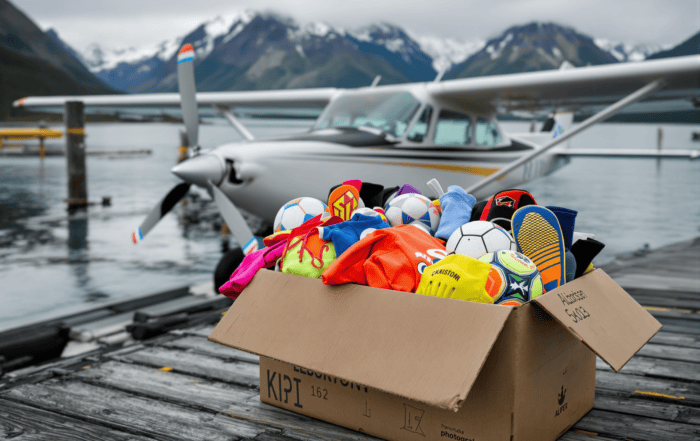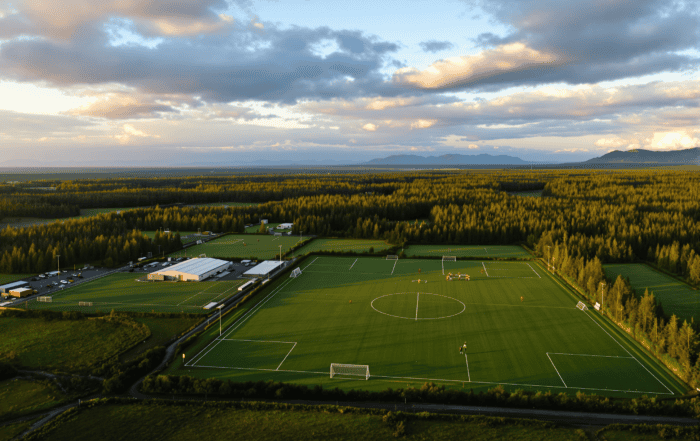
Across Alaska, Indigenous organizations and athletes are working to expand youth participation in soccer and traditional Native games, framing sport as both a physical activity and a vehicle for cultural preservation. The effort spans statewide youth soccer programs, decades-old Native sports associations, and academic research examining how Indigenous athletes navigate a sport historically shaped by exclusion.
Indigenous peoples in North America have played soccer, football, basketball and baseball for generations, according to the First Nations Development Institute, which notes that Native athletes’ participation and advocacy in sport have helped strengthen their communities First Nations Development Institute. That long history underpins current efforts in Alaska to connect youth with both mainstream sports and traditional games rooted in Indigenous culture.
National Organizations Target Native Youth
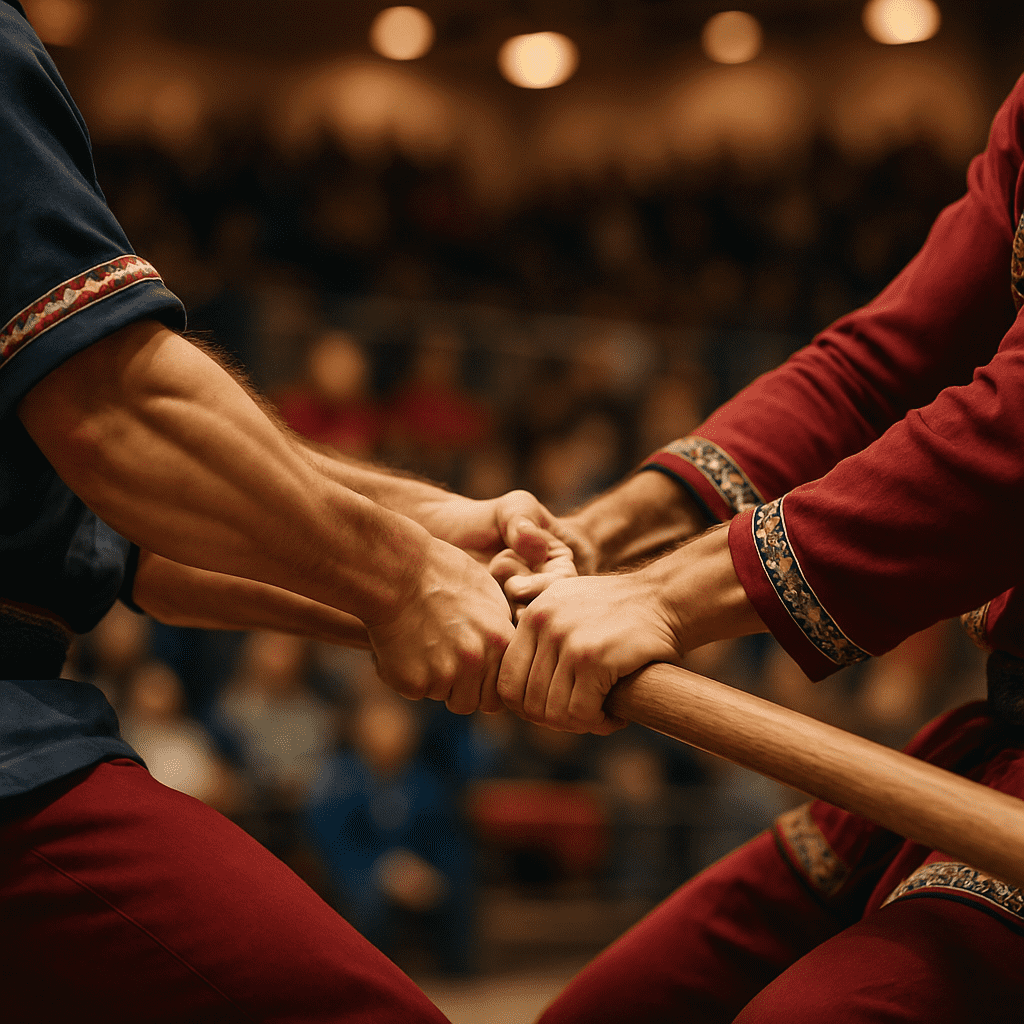
Boys & Girls Clubs of America operates a Native Services program designed to engage and support American Indian, Alaska Native, Native Hawaiian and American Samoan youth through sport, part of a broader movement among sport-for-development organizations to serve Indigenous communities, according to Beyond Sport Beyond Sport. The program reflects a national push to use athletics, including soccer, as a tool for youth engagement in Native communities.
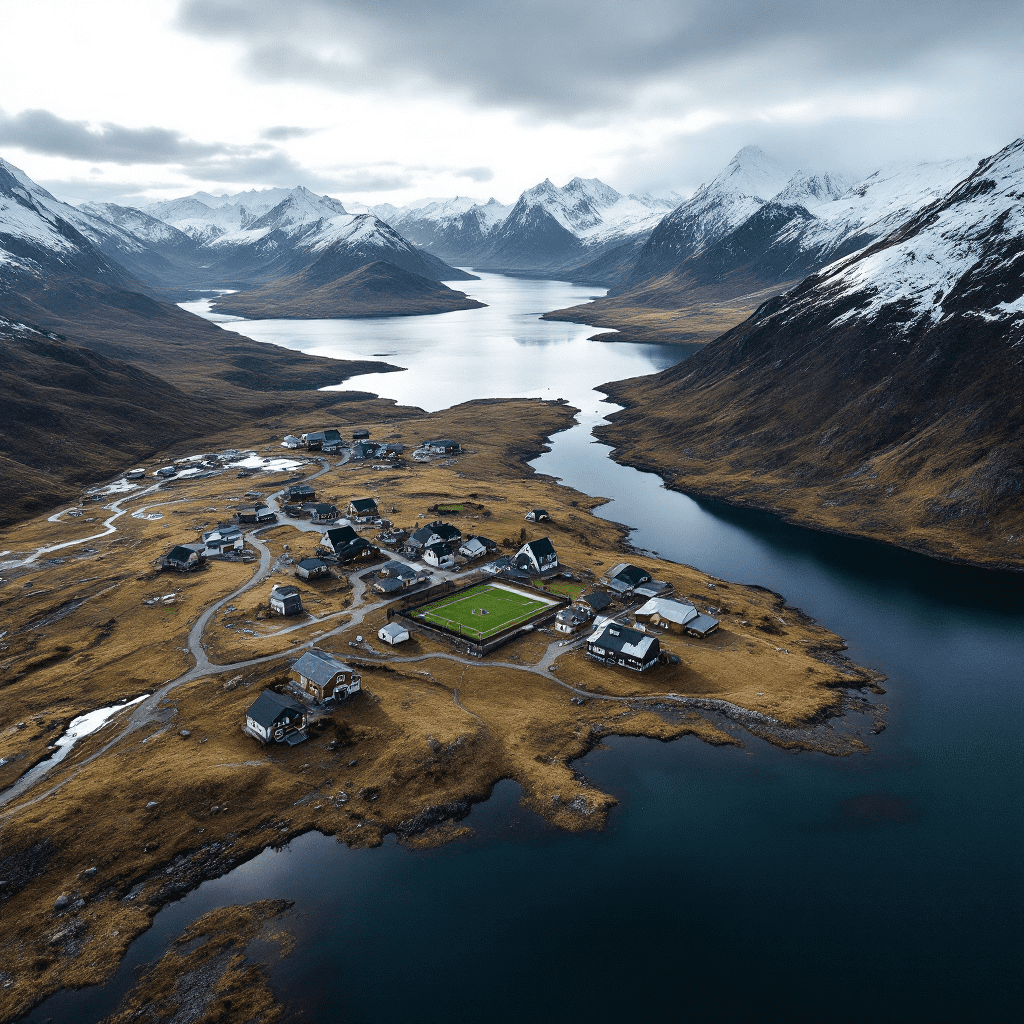
In Alaska specifically, the Alaska Youth Soccer Association says it operates a full-inclusion, year-round grassroots and competitive program for players of all ages and skill levels, despite the state’s geographic and weather-related challenges, according to the organization Alaska Youth Soccer. Those challenges are significant in a state where many communities are accessible only by air or boat.
Barriers Unique to Rural and Indigenous Athletes
Research on Indigenous soccer participation identifies systemic obstacles that shape early sport experiences for Native athletes, including geographic isolation, travel demands, limited access to certified coaching, and cultural and community responsibilities, according to a report from the Sport Information Resource Centre Sport Information Resource Centre. Those barriers are particularly relevant in Alaska, where many Native communities are remote and lack year-round access to organized leagues.
A doctoral study on North American Indigenous soccer argues that the sport can function as a mechanism of decolonization and intergenerational healing for Native American and First Nations peoples, directly challenging what the study describes as a hegemonic sports culture marked by Native mascotry and invisibility, according to the research published through eScholarship eScholarship. The study frames soccer participation as a way for Indigenous communities to assert visibility within a global sport.
Traditional Games Run Parallel to Soccer
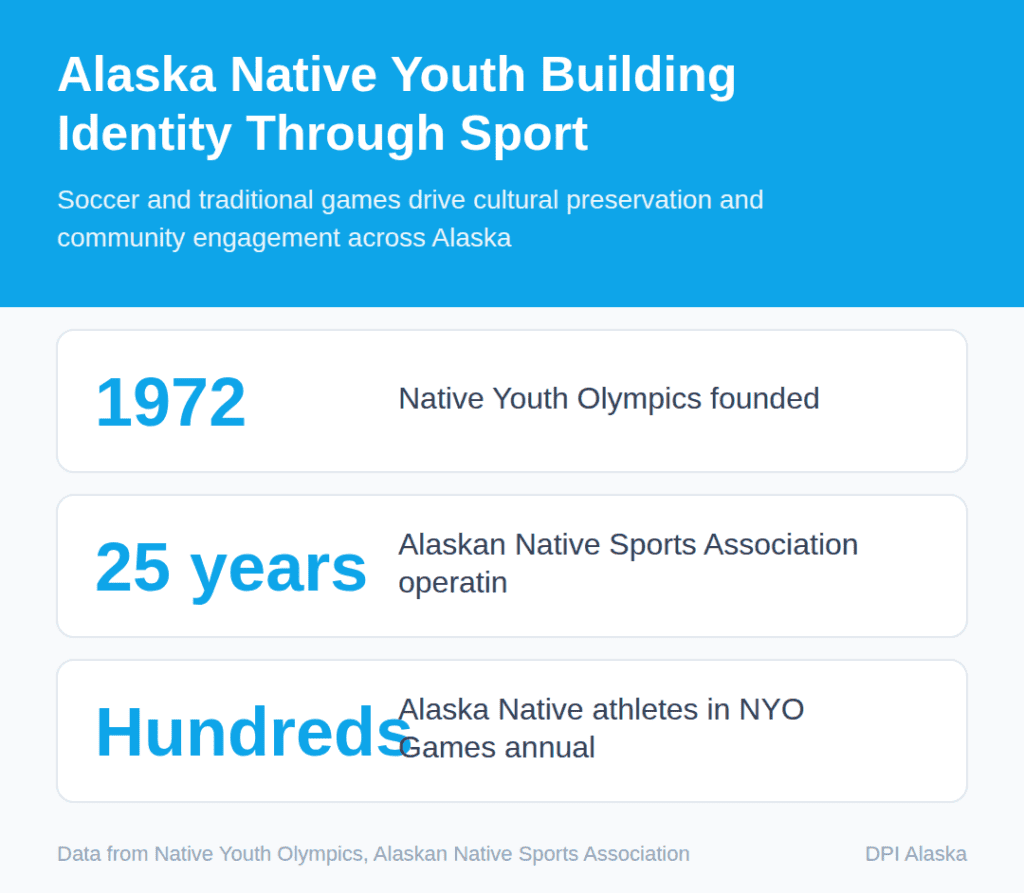
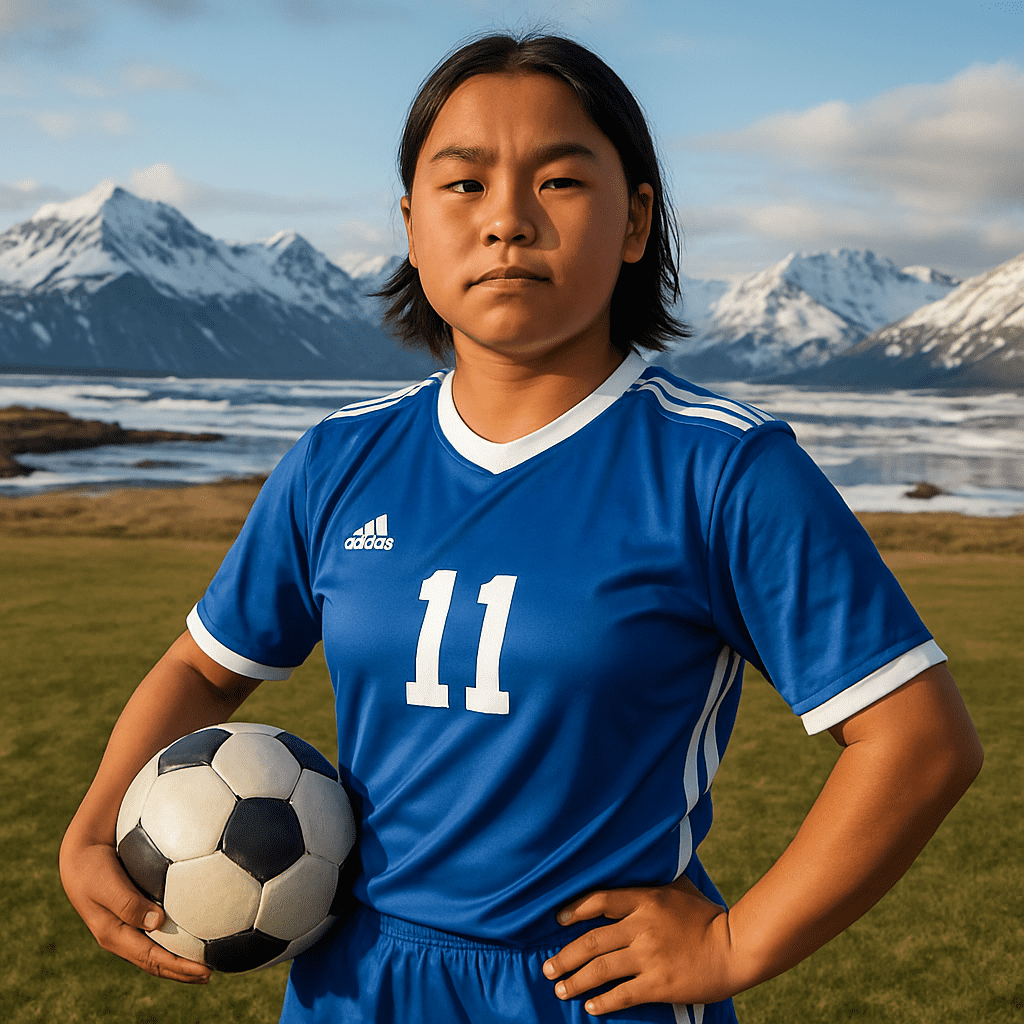
Alongside soccer, Alaska Native communities maintain a robust tradition of Arctic sports through the Native Youth Olympics, or NYO Games, a statewide competition rooted in Arctic sports that began in 1972 and continues alongside events such as the Arctic Winter Games and World Eskimo Indian Olympics, according to Wikipedia Wikipedia. The competition attracts hundreds of Alaska Native athletes annually and includes events such as the stick pull, which mimics the act of holding onto a slippery seal, paying tribute to survival skills used by ancestors, according to a report AOL.
Nicole Johnson, head official of the Native Youth Olympics and one of Alaska’s most decorated Native athletes, said today’s youth play the games to preserve their culture and heritage and to teach others how difficult life used to be for their ancestors, according to the same report AOL.
Some athletes have moved between soccer and traditional Indigenous games. Kyle Worl, of Fairbanks and Anchorage, played soccer, swimming and gymnastics as a child but did not connect with those sports, later finding his calling in traditional Indigenous games such as the one-foot-high kick and seal hop — disciplines now also practiced by non-Native athletes, according to a report AOL.
Sustained Community Investment
Beyond soccer and Arctic games, other organizations have built long-running sports programs for Native youth. The Alaskan Native Sports Association has spent 25 years offering Native youth and young adults what it describes as a transitional commitment connecting people of Native heritage, using sports such as basketball as a core program to build teamwork and mental toughness while preserving Native traditions, according to the organization Alaskan Native Sports Association.
Together, these programs illustrate a layered approach in Alaska, where soccer, basketball and traditional Arctic sports each serve as avenues for Indigenous youth engagement, cultural continuity and community building, according to the organizations and researchers cited in their respective reports.
Sources
- Indigenous Communities in Focus – Beyond Sport
- Celebrating Indigenous Contributions in Sports | First Nations Development Institute
- North American Indigenous Soccer: Visibility, Intergenerational Healing, and Schelangen in Global Football
- Beyond the game: How culture and coaching transform Indigenous soccer – The Sport Information Resource Centre
- Arctic sports – Wikipedia
- Alaska's Indigenous teens emulate ancestors' Arctic survival skills at the Native Youth Olympics
- Alaska's Indigenous teens emulate ancestors' Arctic survival skills at the Native Youth Olympics
- This Athlete Wants to Bring His Indigenous Sport to the Olympics
- Alaska Youth Soccer
- AlaskanNative Sports Association